
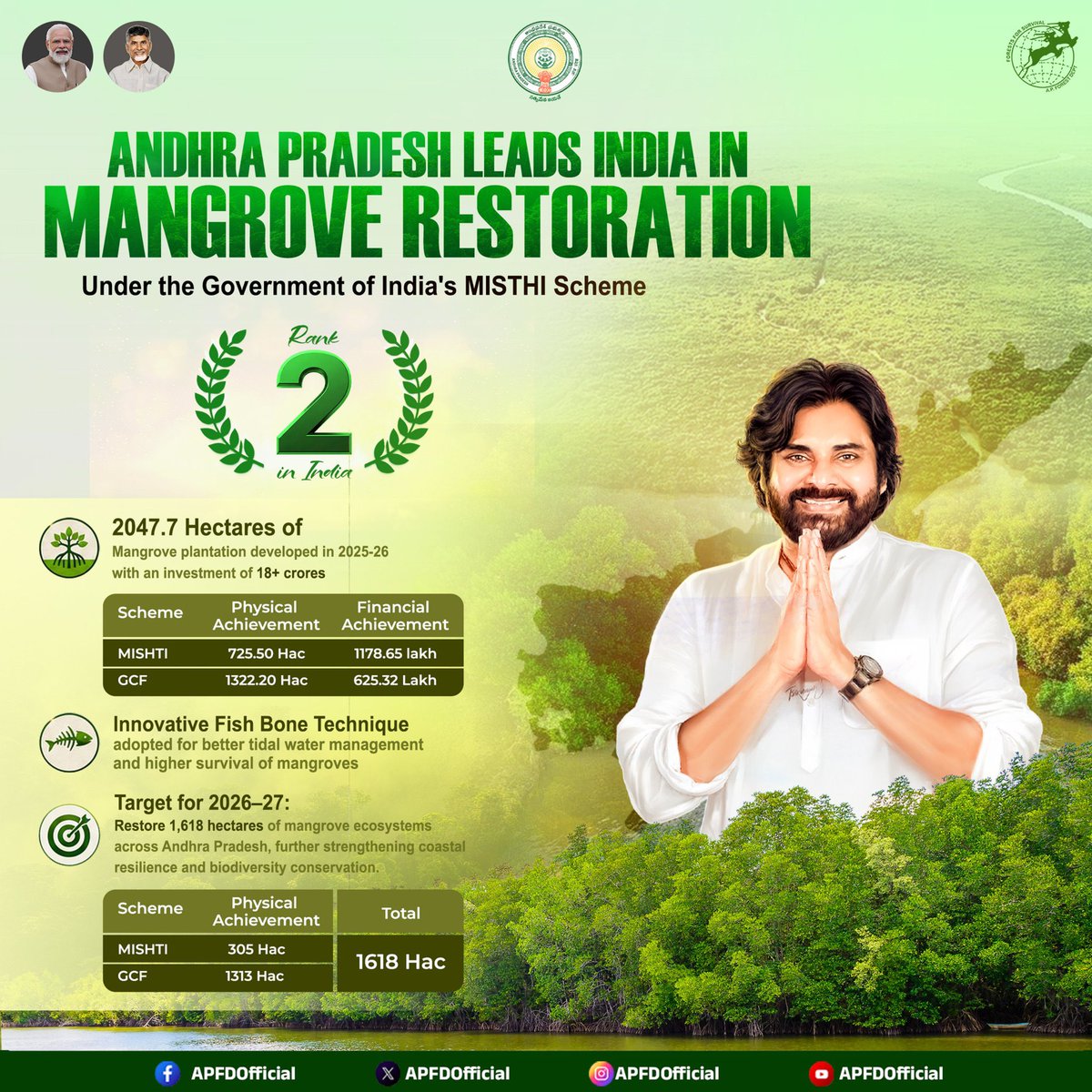
- Andhra Pradesh has secured second place among Indian states under the Centre’s MISHTI (Mangrove Initiative for Shoreline Habitats and Tangible Incomes) scheme, with the state emerging as a leading performer in mangrove restoration.
- The state successfully raised mangrove plantations over 1,400 hectares from 2024 to 2026 in the Rajamahendravaram and Guntur forest circles using the Fish Bone technique at a cost of ₹13 crore. The news comes ahead of World Mangrove Day on July 26.
- The state continues to strengthen coastal ecosystem restoration and biodiversity conservation through large-scale mangrove development under its Great Green Wall of Andhra Pradesh initiative.
- The mangrove project is being implemented in the state jointly by the Andhra Pradesh Forest Department and the M.S. Swaminathan Research Foundation under the Compensatory Afforestation Fund Management and Planning Authority (CAMPA).
- The central and the state governments are sharing the project cost equally.
- Forest officials explained that they developed mangrove plantations by creating channels in estuaries to ensure a suitable mix of river and seawater with the required salinity for mangrove growth. They said channel creation and maintenance accounted for most of the work, while planting saplings had been a smaller part of the project.
- Officials said the channels would be maintained for five years to ensure adequate water flow and salinity, enabling the mangrove plants to establish themselves. This will enable natural regeneration through seed dispersal.
- The Forest department also adopted the Fish Bone Technique, an innovative restoration method designed to improve tidal water circulation, increase mangrove survival rates and enhance long-term ecological resilience.
- For 2026-27, the state has set a target of restoring 1,618 hectares of mangrove ecosystems across Andhra Pradesh.
- Science-based restoration measures, sustainable coastal management practices and continued conservation efforts are aimed at building climate-resilient coastlines, protecting biodiversity and strengthening the livelihoods of coastal communities.
- The state’s 1,053-km coastline relies on mangroves as a natural barrier against cyclones, storm surges, coastal erosion and the growing impacts of climate change.
- Mangroves also support marine biodiversity, sustain coastal livelihoods and store significant amounts of blue carbon, making them critical for long-term ecological resilience.
- Highlighting the state’s conservation efforts, the Deputy Chief Minister said nearly 7,000 acres of mangroves had been restored and developed over the past two years under the Great Green Wall of Andhra Pradesh initiative. The government has set a target of restoring another 4,000 acres during 2026-27 to further strengthen the state’s natural coastal defences and protect vulnerable communities.